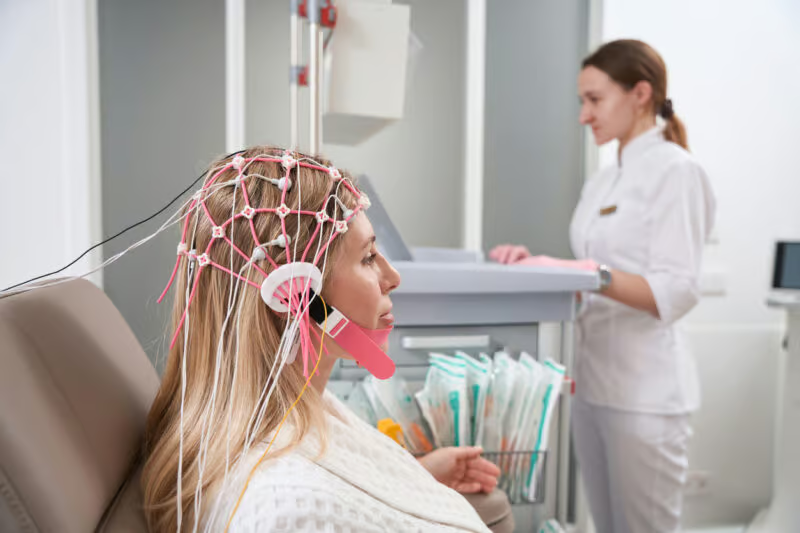
Maybe a friend mentioned it, a provider brought it up, or it surfaced in your search results at 2 a.m.: a depression treatment that uses magnets instead of medication. It sounds futuristic, and it is fair to be curious and a little skeptical. TMS therapy is a real, FDA-cleared treatment that has been used for years, and for people whose depression has not improved with medication, it can be a meaningful next option. Here is what TMS actually is, how it works, and how to tell whether you might be a candidate.
What Is TMS Therapy?
Transcranial Magnetic Stimulation (TMS) is a noninvasive, drug-free treatment that uses magnetic fields to stimulate nerve cells in specific areas of the brain involved in mood regulation. It is FDA-cleared and best known as a treatment for major depression, particularly when medication has not brought enough relief.
“Noninvasive” means exactly that: no surgery, no anesthesia, no sedation. You sit in a comfortable chair, awake and alert, while a device placed against your head delivers focused magnetic pulses. At Foresight, we provide TMS through the NeuroStar Advanced Therapy System at our Smyrna office; you can read full details on our TMS treatment page.
If you would rather talk through your options with a professional first, that works too: Get matched with a provider.
How Does TMS Work?
Research on depression consistently points to underactivity in certain brain regions, especially the prefrontal cortex, which helps regulate mood. TMS targets those regions directly. During a session, the device generates brief magnetic pulses, similar in strength to those of an MRI machine, that pass painlessly through the skull and stimulate the nerve cells beneath. Repeated over a course of sessions, this stimulation encourages those underactive circuits to become more active, which is associated with improvement in depression symptoms.
One important clarification, because it is the most common fear: TMS is not electroconvulsive therapy (ECT). It does not induce seizures, require anesthesia, or cause memory loss. You remain awake through every session and can drive yourself home afterward.
What Conditions Can TMS Treat?
TMS is most established as a treatment for major depressive disorder, especially treatment-resistant depression, meaning depression that has not responded adequately to antidepressant medication. If that is your situation, our deeper guide on TMS therapy for depression walks through the evidence in detail.
Beyond depression, TMS has FDA clearance or growing research support for other conditions, including OCD and Anxious Depression. NeuroStar, the system Foresight uses, is also FDA-cleared as an adjunct treatment for adolescents ages 15 to 21 with depression, the first TMS system cleared for that age group. And because TMS is drug-free, it is being explored for people who want to avoid medication in specific seasons of life, such as new mothers navigating postpartum depression.
Who Is TMS Designed For?
You might be a good candidate for TMS if several of these sound familiar:
- You have tried one or more antidepressants without enough improvement
- Medication side effects have been hard to tolerate or have made you stop treatment
- You want an evidence-based option that does not involve daily medication
- Your depression keeps returning despite treatment
- You can commit to a series of short sessions over several weeks
TMS is not for everyone. It requires a prescription and a screening process, and it is generally not recommended for people with certain metal implants in or near the head or with specific seizure-related risk factors. That is exactly what the initial consultation is for: a provider reviews your history and determines whether TMS is safe and appropriate for you.
What Is a TMS Session Like?
A typical TMS course involves short sessions several days a week over several weeks. Each visit, you settle into a chair, the magnetic coil is comfortably positioned against your head, and the device delivers pulses to the areas of your brain that control your mood and emotions. Sessions generally take around 20 minutes, and there is no downtime: people commonly return to work, school, or errands immediately afterward.
Some people notice mild scalp discomfort or a headache early in treatment, which usually fades as sessions continue. Your care team monitors your response throughout the course. For more specifics, Foresight keeps a dedicated TMS FAQ page with common questions.
How Effective Is TMS?
For a treatment that sounds experimental, the outcomes data is encouraging. In a study of real-world NeuroStar patients, 83% of people who completed the full treatment cycle experienced a measurable decrease in the severity of their depression, and 62% of completers reached full remission. Results vary from person to person, and completing the full course matters, but for people who have cycled through medications without relief, those numbers represent genuine hope.
TMS also is not an either-or choice. Many people continue therapy or other treatment alongside TMS, and a coordinated plan is often the strongest approach.
Is TMS Right for You? Next Steps
If you recognized yourself in this article, the next step is simple: talk to someone qualified to evaluate your situation. TMS at Foresight is available at our Georgia offices, with consultations held at our Smyrna location or virtually for your convenience. Scheduling a NeuroStar consultation is free. You can find the details, including how to reach our TMS treatment coordinator, on our TMS treatment page.
If you are still weighing your options, or TMS isn’t available where you live, you don’t have to sort it out alone. Foresight’s providers can help you understand the full range of depression treatments and build a plan that fits your life.