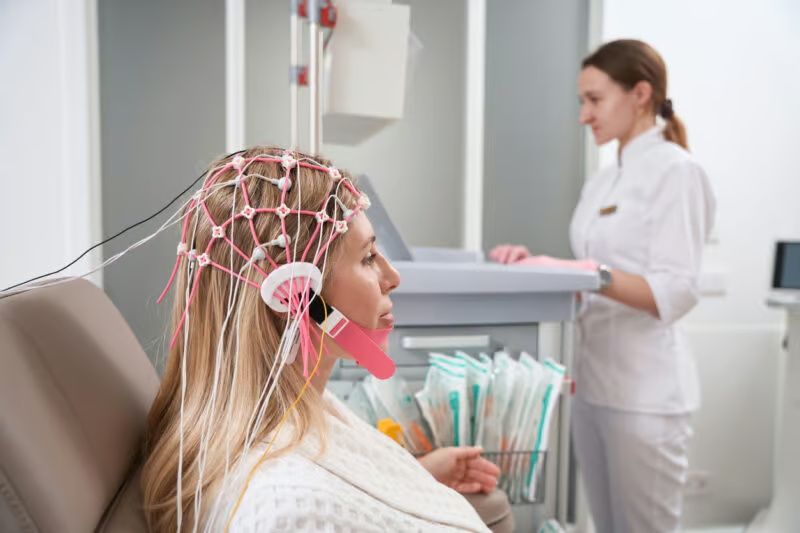
For many new mothers, the search for postpartum depression treatment runs into the same wall: every path seems to lead back to a prescription. If you are breastfeeding, or you have had a hard time with antidepressants before, or you simply do not want to add medication to an already overwhelming season, that can feel like a dead end.
It is not. Transcranial magnetic stimulation, usually shortened to TMS, is a non-medication treatment for depression that uses magnetic pulses to stimulate an area of the brain involved in mood regulation. Nothing is swallowed, nothing enters your bloodstream, and nothing passes into breast milk.
This guide explains how TMS works, what the research currently shows for postpartum depression, what a full course of treatment genuinely asks of you, and how it compares with the other options on the table.
Postpartum Depression Is More Than the Baby Blues
Most new mothers experience some tearfulness, exhaustion, and mood swings in the first two weeks after birth. That is the baby blues, and it usually lifts on its own. Postpartum depression is different: it lasts longer, runs deeper, and does not resolve with rest and time alone.
It can begin during pregnancy or any time in the first year after delivery, and it affects roughly one in eight birthing people. Common signs include:
- Persistent sadness, emptiness, or hopelessness that does not lift.
- Losing interest in things you used to enjoy, including time with your baby.
- Anxiety, racing thoughts, or a constant sense of dread.
- Difficulty sleeping even when the baby sleeps, or sleeping far more than usual.
- Feeling detached from your baby, or struggling to bond.
- Intense guilt, shame, or the belief that you are failing as a mother.
- Trouble concentrating or making everyday decisions.
None of these are character flaws or signs that you love your baby less. Postpartum depression is a medical condition with biological, hormonal, and situational contributors, and it responds to treatment.
When to Seek Help Right Away
Some symptoms should not be waited out until a scheduled appointment. Call or text 988 to reach the Suicide and Crisis Lifeline, available 24 hours a day, or go to your nearest emergency room if you are having thoughts of harming yourself or your baby, or if you experience confusion, hallucinations, paranoia, or a sense that reality has shifted. That last group of symptoms can indicate postpartum psychosis, which is rare but is a medical emergency.
One important distinction: many new mothers have sudden, unwanted, intrusive thoughts about something bad happening to their baby. These thoughts are frightening and often deeply shameful to admit, but they are common in postpartum anxiety and postpartum OCD, and they are not the same as postpartum psychosis.
Mothers with intrusive thoughts are typically horrified by them and have no desire to act on them. Telling a provider about them is safe and the fastest way to get the right support.
What Is TMS Therapy?
Transcranial magnetic stimulation is a non-invasive brain stimulation treatment. During a session, a provider positions a magnetic coil against your scalp, usually over the left prefrontal cortex, an area that tends to be underactive in depression. The device delivers repeated magnetic pulses, similar in strength to those used in an MRI, which stimulate nerve cells in that region.
You stay awake and alert the entire time. No anesthesia, no sedation, and no recovery period. Most people drive themselves home afterward and go straight back to their day.
TMS is FDA-cleared for major depressive disorder, obsessive-compulsive disorder, and anxious depression. Foresight offers TMS using the NeuroStar system, with consultations and treatment provided in Georgia.
Why TMS Is Considered for Postpartum Depression
TMS is not systemic. It is a magnetic field applied to the outside of your head, not a substance your body absorbs, metabolizes, or passes along in milk. There is no washout period, no waiting to feed, and no pumping and discarding.
A 2023 systematic review examining TMS use in pregnancy and the postpartum period found it was generally well tolerated, and none of the studies reviewed reported major adverse effects in newborns. For a mother weighing whether to introduce any exposure at all, that absence matters.
It is worth saying clearly, though: this is not an argument against antidepressants. ACOG advises that people with mental health conditions should not be discouraged from breastfeeding, and sertraline in particular has been studied extensively in lactation, with levels in breast milk low enough that the medication is usually undetectable in an infant’s blood.
For many mothers, an antidepressant is the right choice. TMS is an additional option, not a verdict on medication. If you are already taking an antidepressant, do not stop it on your own; talk with your prescriber first.
What the Research Currently Shows
Honesty matters more than enthusiasm here. TMS is FDA-cleared for major depressive disorder, not specifically for postpartum depression, so it is used in postpartum patients who meet criteria for a depressive episode rather than under a separate postpartum clearance.
The studies looking specifically at postpartum depression are encouraging but small. Across them, researchers have reported meaningful reductions in depressive symptoms, with improvement often appearing within the first few weeks. What does not yet exist is a large, rigorous trial that could settle the question.
What this means practically: TMS is a reasonable option to discuss with a provider, particularly if medication is not a good fit for you, and it is not a guaranteed answer. A provider who knows both TMS and perinatal mental health can help you weigh it against everything else available.
What a Course of TMS Actually Involves
The first appointment is longer than the rest. Your provider maps your motor threshold, the minimum amount of stimulation needed to produce a small twitch in your hand, and uses it to calibrate your dose. Once that is set, sessions become routine.
A typical course looks like this:
- Sessions generally last around 20 to 40 minutes, depending on the protocol your provider uses.
- Treatment is usually delivered five days a week.
- A standard course runs roughly six weeks, often followed by a short taper, for about 36 sessions in total.
- You sit in a reclining chair, awake, and can talk, listen to music, or simply rest.
Most people describe the sensation as a tapping or knocking on the scalp. The most common side effects are scalp discomfort at the treatment site and headache, both of which tend to ease after the first week or so. Seizure is a known but very rare risk, and your provider will screen for anything that raises it.
The Time Commitment
Five appointments a week for six weeks is a lot to manage with a newborn at home. It means childcare or a support person, transportation, and a schedule that holds up on the days when nothing else does. This is the most common reason postpartum patients decide TMS isn’t the right fit right now, and it is a legitimate reason.
It is worth asking a clinic directly how they handle this: whether appointment times are flexible, whether you can bring a support person, and what happens if you miss a day. Knowing the logistics before you commit is far better than discovering them in week two.
Who Might Be a Good Candidate for TMS Therapy
TMS tends to come up in a few specific situations:
- You have tried therapy, medication, or both, and have not gotten enough relief.
- You are breastfeeding and want to minimize any exposure for your baby.
- You have had difficult side effects from antidepressants in the past, or you cannot tolerate them.
- You strongly prefer a non-medication approach and have the schedule flexibility a course requires.
TMS is not appropriate for everyone. Metal implants or devices in or near the head, certain medical conditions, and a history of seizures may rule it out or require extra caution. A provider will screen for all of this before treatment begins.
How TMS Compares With Other Postpartum Depression Treatments
TMS is one option among several, and for many mothers the best plan combines more than one.
- Therapy: Approaches such as cognitive behavioral therapy and interpersonal therapy have strong research support for postpartum depression, and they carry no exposure concerns at all. For mild to moderate symptoms, a therapy session is often the recommended starting point.
- Antidepressant: SSRIs remain the most studied medication option, including during breastfeeding, and they can work well. They typically take several weeks to reach full effect.
- Zuranolone: An oral medication approved specifically for postpartum depression, taken as a 14-day course, that acts more quickly than traditional antidepressants. Your provider can explain whether it fits your situation, including any considerations around breastfeeding.
- Brexanolone: An intravenous medication for postpartum depression given over 60 hours in a monitored setting, generally reserved for more severe cases.
- Combined care: Many mothers do best with a combination, such as therapy alongside either medication or TMS, with a psychiatric provider coordinating the plan.
There is no single right answer, and the best combination depends on how severe your symptoms are, how quickly you need relief, whether you are breastfeeding, what you have already tried, and what fits your life. A psychiatric evaluation through our psychiatry services usually sorts that out.
Where to Get Care at Foresight
Foresight provides TMS through our TMS service in Georgia, with consultations and treatment in our Smyrna office. If you are outside Georgia, TMS is not something we can currently provide, though a local provider may be able to.
Perinatal mental health care is available much more widely. Our maternal mental health program supports pregnancy, postpartum, and other reproductive transitions with psychiatry, medication management, and therapy from clinicians who specialize in this stage of life, across California, Georgia, Arizona, Florida, and Texas, with virtual care available as well.
You can also read more about perinatal mood and anxiety disorders and how they are treated.
Get Matched With a Provider
You do not have to know which treatment you want before reaching out. If you have been struggling since your baby arrived, and it has lasted longer than a couple of weeks or is getting in the way of daily life, that is reason enough to talk with someone.
Foresight can connect you with a provider who understands postpartum mental health, review the full range of options with you, including whether TMS makes sense, and help you build a plan that fits the life you are actually living right now.
Frequently Asked Questions
Is TMS safe while breastfeeding?
TMS does not involve a drug, so there is nothing to pass into breast milk. Studies of TMS in pregnancy and the postpartum period have not reported major adverse effects in newborns. You do not need to pump and discard or delay feeding around sessions. Your provider will review your individual history before starting.
Is TMS FDA-approved for postpartum depression?
TMS is FDA-cleared for major depressive disorder, obsessive-compulsive disorder, and anxious depression. It does not carry a separate clearance for postpartum depression, so it is used in postpartum patients who meet criteria for a depressive episode.
Does Transcranial Magnetic Stimulation hurt?
Most people describe a tapping or knocking sensation on the scalp that takes some getting used to. Scalp discomfort and headache are the most common side effects, and they usually fade within the first week or two. Your provider can adjust the settings if a session is uncomfortable.
How long before TMS starts working?
Many people notice changes somewhere between weeks two and four, though it varies, and some improvement appears only near the end of a course. Others do not respond, which is true of every depression treatment. Your provider will track symptoms along the way rather than waiting until the end to assess.
Can I keep taking my antidepressant during TMS?
Usually yes. TMS is often used alongside medication rather than instead of it. Never stop or change an antidepressant on your own; that decision belongs in a conversation with your prescriber.
Is TMS covered by insurance?
Many plans cover TMS for major depressive disorder, typically after other treatments have been tried, and requirements vary by plan and state. Coverage and billing details are available on our patient information page, and a treatment coordinator can help you check your specific plan before you commit.